
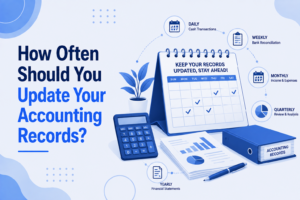
Keeping accurate accounting records is one of the most important responsibilities of any business. However, many SME owners only update their books when a deadline is approaching or when they need information for a specific purpose.
While this may seem like a time-saving approach, delaying bookkeeping often leads to missing documents, inaccurate records and unnecessary stress. The longer accounting records are left unattended, the more difficult they become to organise and maintain.
So, how often should you update your accounting records?
The short answer is regularly. For most SMEs, updating accounting records on a weekly or monthly basis helps maintain accuracy and keeps financial information current. The ideal frequency, however, depends on the size of your business, the number of transactions and how you operate.
In this guide, we’ll explore how often different businesses should update their accounting records and why staying current is beneficial.
Why Updating Your Accounting Records Matters
Accounting records provide a complete history of your business’s financial activities.
Keeping them up to date helps you:
- Record transactions accurately
- Keep financial information organised
- Identify missing documents early
- Reduce bookkeeping backlogs
- Support better business decisions
- Prepare information needed for other professional services
Regular bookkeeping also makes it easier to locate supporting documents when they are needed.
What Happens If You Delay Updating Your Books?
Many business owners delay bookkeeping because they are busy with day-to-day operations.
Unfortunately, waiting several months before updating accounting records often creates additional problems.
These may include:
- Missing receipts
- Lost supplier invoices
- Forgotten business expenses
- Duplicate transactions
- Bank reconciliation issues
- Large bookkeeping backlogs
- Increased time spent correcting errors
The longer bookkeeping is postponed, the more difficult it becomes to reconstruct accurate accounting records.
How Often Should Different Businesses Update Their Accounting Records?
There is no universal schedule that suits every business. The appropriate frequency depends largely on transaction volume.
Businesses with High Transaction Volumes
Businesses such as retail shops, restaurants, wholesalers and e-commerce companies often process numerous transactions each day.
For these businesses, accounting records should ideally be updated daily or several times a week.
Frequent updates help prevent large backlogs and make bank reconciliations more manageable.
Small Businesses with Moderate Transaction Volumes
Many SMEs process a manageable number of transactions each week.
For these businesses, weekly bookkeeping is often sufficient.
Updating records every week allows businesses to:
- Record transactions promptly
- Keep supporting documents organised
- Monitor outstanding customer invoices
- Record supplier invoices consistently
- Reconcile bank transactions regularly
Weekly bookkeeping also spreads the workload more evenly throughout the month.
Businesses with Low Transaction Volumes
Some service-based businesses and startups may only have a relatively small number of monthly transactions.
In these cases, monthly bookkeeping may be appropriate, provided transactions are recorded consistently and supporting documents are retained.
Waiting longer than a month is generally not recommended because records become more difficult to maintain accurately.
Signs You’re Not Updating Your Records Frequently Enough
You may need to update your accounting records more regularly if you experience any of the following:
- Receipts are piling up on your desk.
- Supplier invoices are difficult to locate.
- Bank reconciliations are several months behind.
- You cannot remember what certain transactions relate to.
- Your accounting software shows unreconciled transactions.
- You rush to organise your books before deadlines.
- Correcting bookkeeping errors is becoming increasingly time-consuming.
These are common indicators that your bookkeeping process needs improvement.
Benefits of Updating Your Accounting Records Regularly
Maintaining current accounting records provides several practical advantages.
Better Organisation
Regular bookkeeping ensures invoices, receipts and supporting documents remain organised and easy to retrieve.
Improved Accuracy
Recording transactions while they are still fresh reduces the likelihood of errors or forgotten entries.
Easier Bank Reconciliations
Reconciling bank transactions regularly is much simpler than trying to reconcile several months of activity at once.
Less Stress
Keeping your accounting records up to date avoids the pressure of dealing with large bookkeeping backlogs.
Greater Business Visibility
Current accounting records provide a clearer picture of your business activities and financial position throughout the year.
How Cloud Accounting Makes Regular Updates Easier
Many SMEs now use cloud accounting software to simplify bookkeeping.
Cloud accounting platforms allow businesses to:
- Record transactions more efficiently
- Import bank transactions
- Store supporting documents electronically
- Collaborate with their accounting firm
- Access accounting records from anywhere
Although technology helps streamline bookkeeping, accounting records still require regular review to ensure transactions are correctly recorded and organised.
Tips for Keeping Your Accounting Records Up to Date
Developing good bookkeeping habits can save considerable time later.
Some practical tips include:
Set a Regular Schedule
Allocate time each week or month specifically for updating your accounting records.
Treat bookkeeping as a routine business activity rather than something to do only when deadlines approach.
Keep Supporting Documents Organised
Store invoices, receipts and bank statements in an organised filing system, whether digitally or in hard copy.
Having documents readily available makes bookkeeping faster and more accurate.
Reconcile Bank Accounts Regularly
Frequent bank reconciliations help identify missing transactions before they become difficult to trace.
Use Cloud Accounting Software
Cloud accounting platforms can automate parts of the bookkeeping process and reduce manual data entry.
Engage Professional Accounting Services
If bookkeeping is regularly falling behind, outsourcing your accounting may be a practical solution.
Professional accountants can maintain your accounting records consistently, helping you avoid backlogs while allowing you to focus on your business.
Common Mistakes to Avoid
Many SMEs unintentionally create bookkeeping problems by following inconsistent practices.
Avoid these common mistakes:
- Updating records only once a year
- Waiting until documents pile up
- Ignoring bank reconciliations
- Losing receipts and invoices
- Mixing personal and business expenses
- Relying solely on memory to record transactions
- Leaving bookkeeping until compliance deadlines approach
Small issues can quickly develop into larger accounting problems if left unaddressed.
Conclusion
There is no single bookkeeping schedule that suits every business. The right frequency depends on your transaction volume, business operations and available resources.
For most Singapore SMEs, updating accounting records weekly or monthly provides a practical balance between efficiency and accuracy. Businesses with higher transaction volumes may benefit from more frequent updates to keep pace with daily activity.
Rather than waiting until year-end or before important deadlines, maintaining your accounting records consistently throughout the year helps reduce errors, keeps your financial information organised and makes day-to-day business administration much more manageable.
How Accounting Consultancy Pte Ltd Can Help
At Accounting Consultancy Pte Ltd, we help Singapore SMEs maintain accurate and up-to-date accounting records through reliable accounting services tailored to their business needs. Whether you require weekly, monthly or customised bookkeeping support, our team can help keep your records organised so you can focus on running your business with confidence.
Should your business also require financial statement preparation, corporate tax, payroll, GST or company secretarial services, these are available as separate professional engagements to provide comprehensive support as your business grows.
Frequently Asked Questions
Is monthly bookkeeping enough?
For many SMEs with relatively low transaction volumes, monthly bookkeeping is sufficient. Businesses with higher transaction volumes may benefit from weekly or even daily updates.
Can I update my accounting records quarterly?
While some businesses attempt to do so, quarterly updates often result in bookkeeping backlogs and make it more difficult to maintain accurate accounting records. More frequent updates are generally recommended.
What happens if my bookkeeping falls behind?
Delayed bookkeeping can lead to missing documents, unreconciled bank accounts, duplicate entries and increased time spent correcting accounting records.
Should I outsource my bookkeeping?
If bookkeeping is becoming time-consuming or regularly falls behind, engaging professional accounting services can help ensure your accounting records remain accurate and organised throughout the year.